Immunotherapy, CAR-T Cells and Precision Oncology
Explore the latest cancer treatment advances in 2026, including CAR-T cell therapy, cancer immunotherapy, personalized mRNA vaccines, targeted therapies and precision oncology research
Discover how cancer immunotherapy, CAR-T cell therapy, personalized cancer vaccines, targeted treatments and molecular research are reshaping the future of oncology.
Cancer research is undergoing a remarkable transformation. Advances in molecular biology, immunology, genetic engineering and computational science are opening new possibilities for understanding tumor development and designing increasingly precise treatment strategies.
The latest advances in cancer treatment are increasingly focused on understanding the biological characteristics of each tumor. From CAR-T cell therapy and cancer immunotherapy to personalized mRNA vaccines and molecularly targeted treatments, modern oncology is moving toward more individualized approaches.
In 2026, research continues to explore how scientists can improve immune-cell recognition, overcome treatment resistance and identify molecular biomarkers that predict therapeutic responses.
1. Cancer Immunotherapy: Harnessing the Immune System Against Tumors
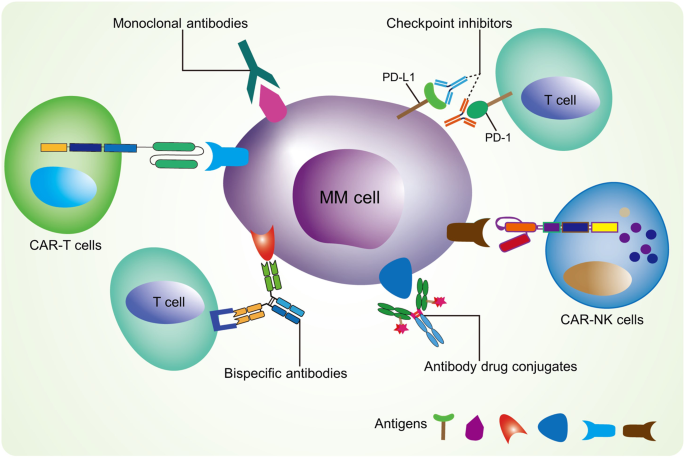
Cancer immunotherapy is one of the most influential developments in modern oncology. Rather than relying exclusively on conventional approaches that directly damage tumor cells, immunotherapy uses or modifies components of the immune system to recognize and attack cancer.
Immune checkpoint inhibitors: PD-1, PD-L1 and CTLA-4
Immune checkpoint proteins regulate immune activity and help prevent excessive immune responses. However, certain tumors exploit these pathways to evade immune recognition.
Checkpoint inhibitors targeting PD-1, PD-L1 and CTLA-4 can help restore antitumor immune activity. These approaches have become important in the treatment of several cancers, including melanoma, lung cancer and certain other solid tumors.
What is changing in immunotherapy research?
Researchers are investigating combination strategies that integrate checkpoint inhibitors with other immunological approaches. These include personalized vaccines, engineered immune cells and treatments designed to modify the tumor microenvironment.
- Improving T-cell activation and tumor recognition.
- Investigating mechanisms of immune resistance.
- Developing combination immunotherapy strategies.
- Identifying predictive biomarkers for treatment response.
2. CAR-T Cell Therapy: Engineering Immune Cells to Target Cancer
Chimeric Antigen Receptor T-cell therapy, commonly called CAR-T cell therapy, is an advanced form of cellular immunotherapy that involves genetically engineering a patient's T cells to recognize specific antigens expressed by cancer cells.
The modified immune cells are expanded under controlled laboratory conditions and subsequently administered to the patient. Once introduced into the body, they can identify and attack cells expressing their target antigens.
Next-generation CAR-T research
While CAR-T therapies have demonstrated important clinical benefits in several blood cancers, researchers are now working to extend their applications to solid tumors.
Solid Tumor Applications
Investigating CAR-T approaches for glioblastoma, ovarian cancer, lung cancer and gastrointestinal malignancies.
Dual-Target CAR-T
Engineering immune cells to recognize multiple tumor-associated antigens and potentially reduce antigen escape.
Improved Cell Persistence
Exploring genetic modifications that may improve T-cell survival, activity and persistence within tumors.
Overcoming Tumor Resistance
Studying approaches to overcome immunosuppressive signals and improve immune-cell infiltration.
An important challenge remains the development of effective and safe CAR-T approaches for solid tumors. Research into tumor-associated antigens, cellular engineering and the tumor microenvironment is therefore particularly important.
3. Personalized Cancer Vaccines: The Rise of mRNA Technology

Personalized cancer vaccines represent an important research direction in precision oncology. Unlike traditional preventive vaccines, therapeutic cancer vaccines are designed to stimulate immune responses against specific tumor-associated targets.
How do personalized mRNA cancer vaccines work?
The development process may begin with genomic sequencing of tumor tissue and comparison with normal tissue. Researchers analyze the identified mutations to predict potential neoantigens: abnormal proteins or protein fragments that may be recognized by the immune system.
Selected neoantigen information can then be incorporated into an mRNA vaccine platform. Following administration, cells produce the encoded antigenic material, allowing the immune system to develop a targeted response.
The science behind personalized cancer vaccines
Genomic sequencing → Mutation identification → Neoantigen prediction → mRNA vaccine design → Immune response evaluation
This approach combines genomics, bioinformatics, immunology and molecular biotechnology to develop individualized research strategies.
Ongoing clinical research is investigating personalized cancer vaccines in melanoma, pancreatic cancer and other malignancies. Their potential role in combination with immune checkpoint inhibitors is also being studied.
Although early clinical findings are encouraging in selected settings, personalized cancer vaccines remain an evolving field, and their effectiveness depends on tumor type, clinical context and individual biological characteristics.
4. Targeted Cancer Therapy: Precision at the Molecular Level
Targeted cancer therapy focuses on specific molecular alterations involved in tumor growth, proliferation and survival. These alterations may include genetic mutations, abnormal signaling pathways, receptor overexpression or changes in protein activity.
Advances in genomic profiling have made it possible to identify molecular alterations that may guide treatment selection in certain cancers.
Important molecular targets in oncology
EGFR
Research and targeted treatments involving epidermal growth factor receptor alterations, particularly in selected lung cancer subtypes.
HER2
Antibody-based therapies and antibody-drug conjugates targeting HER2-expressing tumors.
BRCA1 and BRCA2
DNA repair mechanisms and the use of PARP inhibitors in selected cancers with homologous recombination deficiencies.
BRAF and KRAS
Targeting altered signaling pathways involved in tumor cell proliferation and survival.
One important direction is the development of next-generation antibody-drug conjugates (ADCs). These molecules combine an antibody that recognizes a specific cellular target with a linked cytotoxic payload, aiming to deliver the payload preferentially to target-expressing cells.
5. Antibody-Drug Conjugates: Advancing Targeted Oncology
Antibody-drug conjugates are gaining increasing attention in cancer research because they combine the molecular recognition capabilities of antibodies with the activity of therapeutic compounds.
Their structure generally includes three essential components:
- Monoclonal antibody: Recognizes a specific antigen expressed on target cells.
- Linker: Connects the antibody to the therapeutic payload.
- Cytotoxic payload: Provides the cell-damaging activity following appropriate delivery and release.
Current research focuses on improving linker stability, optimizing payload properties, identifying suitable biomarkers and understanding resistance mechanisms.
6. The Tumor Microenvironment: A New Frontier in Cancer Research

Cancer cells do not exist independently. They interact with surrounding stromal cells, immune populations, extracellular matrix components, blood vessels and signaling molecules.
Together, these components form the tumor microenvironment (TME), which plays a significant role in tumor progression, immune evasion and treatment resistance.
Research priorities in tumor microenvironment biology
- Macrophage polarization and tumor-associated macrophages.
- Regulatory T cells and immune suppression.
- Cancer-associated fibroblasts and extracellular matrix remodeling.
- Hypoxia and metabolic adaptation.
- Immune-cell infiltration and spatial organization.
Single-cell RNA sequencing and spatial transcriptomics are helping researchers investigate how different cell populations interact within tumor tissues. These technologies offer increasingly detailed insights into tumor heterogeneity and cellular communication.
7. AI and Computational Biology: Transforming Cancer Treatment Research
Artificial intelligence and computational biology are becoming increasingly important in oncology research. Large-scale biological datasets can now be analyzed using machine learning, deep learning and advanced computational methods.
These technologies support researchers in identifying molecular patterns, predicting potential therapeutic targets and investigating complex biological interactions.
AI-Powered Drug Discovery
Machine learning approaches help identify candidate molecules and investigate interactions between therapeutic compounds and biological targets.
Computational Genomics
Advanced algorithms support the interpretation of genomic alterations and molecular signatures associated with cancer.
Digital Pathology
AI-based image analysis can help characterize tissue structures and identify patterns in histopathological samples.
Predictive Oncology
Computational models are being studied to estimate treatment response and investigate mechanisms of resistance.
8. What Is the Future of Cancer Treatment?
The future of cancer treatment will likely depend on the integration of several scientific disciplines rather than a single therapeutic breakthrough.
Emerging research directions
- Personalized neoantigen-based cancer vaccines.
- Next-generation CAR-T and engineered immune-cell platforms.
- Advanced antibody-drug conjugates.
- Combination immunotherapy and targeted molecular treatments.
- Single-cell and spatial molecular profiling.
- AI-assisted biomarker discovery and drug development.
- Organoid and patient-derived tumor models.
As molecular technologies become more sophisticated, researchers are gaining a better understanding of tumor heterogeneity, genetic alterations and immune interactions. This knowledge may help support the development of more selective and individualized therapeutic strategies.
9. Why Molecular Biology and Biotechnology Matter in Modern Oncology
The development of innovative cancer treatments depends on reliable biological research, advanced laboratory technologies and accurate molecular characterization.
Antibodies, recombinant proteins, ELISA kits, PCR reagents, cell culture products and molecular biology tools all contribute to the experimental workflows used in cancer research.
These technologies support investigations into gene expression, protein interactions, cellular signaling, tumor biomarkers and immune responses.
Conclusion: A New Scientific Era for Cancer Treatment
The latest developments in cancer treatment research demonstrate how rapidly oncology is evolving. Cancer immunotherapy, CAR-T cell engineering, personalized mRNA vaccines, targeted molecular therapies and AI-driven biological analysis are expanding the scientific possibilities for understanding and addressing cancer.
Although many emerging approaches remain under clinical investigation, their development highlights the importance of interdisciplinary collaboration between molecular biologists, immunologists, geneticists, computational scientists and oncology researchers.
The next generation of oncology research will increasingly rely on molecular precision, advanced biotechnology and a deeper understanding of the complex interactions between cancer cells and their surrounding biological environment.
Explore the Science Behind Cancer Research
Discover research tools, antibodies, recombinant proteins, molecular biology reagents and laboratory solutions supporting modern oncology and immunology research.
EXPLORE LIFE SCIENCE PRODUCTSScientific resources and further reading
- National Cancer Institute (NCI) – Cancer research, clinical trials and treatment information.
- FDA Oncology Center of Excellence – Oncology drug development and regulatory updates.
- American Association for Cancer Research (AACR) – Cancer research developments and scientific publications.
- European Society for Medical Oncology (ESMO) – Clinical oncology research and scientific congresses.
- ClinicalTrials.gov – Registered clinical studies and ongoing cancer research.
Scientific note: Investigational approaches discussed in this article are not necessarily approved treatments. Clinical availability, indications and evidence vary. This article is intended for scientific and educational purposes.